Unlocking Creative Potential with the Decoration Toolkit
In the modern digital landscape, visual communication is paramount. Whether you are a graphic designer crafting a brand identity, a small business owner managing social media assets, or a hobbyist looking to create a personalized gift, the demand for high-quality design elements has never been higher. This is where the Decoration Toolkit emerges as an essential resource. By offering over 500 distinct elements, this comprehensive package provides the building blocks necessary to transform simple concepts into polished, professional designs.
The toolkit is not merely a collection of images; it is a versatile library designed to streamline the creative process. From creating intricate logos and branding materials to designing print-ready postcards and scrapbook pages, the applications are virtually limitless. The core value proposition lies in its sheer volume and variety. With access to thousands of individual assets, users can avoid the repetitive nature of stock photography and instead curate unique compositions that stand out in a crowded marketplace.
Diverse Applications for Every Creator
The true strength of the Decoration Toolkit is its adaptability across various industries and personal projects. It bridges the gap between professional software capabilities and user-friendly design outcomes. Below are several practical scenarios where these tools prove indispensable.
- Logo and Branding Creation: For startups and established businesses alike, establishing a strong visual identity is critical. The toolkit includes specific elements like laurels, wreaths, and frames that add a touch of elegance or authority to a logo. A coffee shop might use floral borders to evoke a sense of warmth, while a tech firm could utilize clean geometric shapes to convey precision.
- Print and Postcard Design: In an era dominated by digital marketing, tangible items still hold significant weight. Sending a handwritten-style postcard to a friend or printing a flyer for a local event requires high-resolution graphics. The toolkit allows users to create beautiful things using 500 tools, ensuring that every printed piece looks crisp and professional.
- Scrapbooking and Personal Projects: Digital scrapbooking has gained immense popularity among families and hobbyists. Creating a memory book involves layering photos with decorative accents. The inclusion of ribbons, bows, and swirly shapes enables users to construct complex layouts without needing advanced illustration skills.
- Apparel and Merchandise: If you want to make a nice t-shirt or other merchandise, vector-based assets are crucial. Because the files are scalable, they can be resized from a small tag on a shirt to a large banner without losing quality. This makes the toolkit ideal for print-on-demand businesses.
- Retail and Hospitality: Owners of small shops or cafes often need to create their own signage, menus, and promotional materials. Using the provided frames and text dividers, a cafe owner can design an inviting menu board that matches their interior decor perfectly.
A Comprehensive Inventory of Design Elements
What sets this package apart is the meticulous categorization of its contents. Users do not have to sift through hundreds of unrelated files to find what they need. The inventory is structured to cover almost every decorative need imaginable.
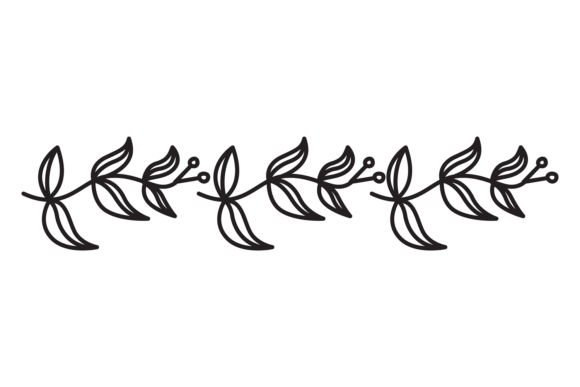
The collection features 10 x Laurels and 11 x Wreaths, which are perfect for adding a classic, celebratory feel to invitations or award certificates. For those seeking more organic movement, there are 4 x Swirly Shapes and 87 x Swirly Elements that can guide the eye through a layout or frame a central image.
Geometry plays a vital role in modern design, and the toolkit addresses this with 16 x Shapes and 39 x Decorative Elements. These can serve as bullet points, background textures, or structural components of a larger design. Furthermore, the aesthetic appeal is significantly boosted by 80 x Florals, which range from delicate blossoms to lush bouquets, suitable for weddings, spring themes, or general decoration.
Structural integrity in design is often achieved through borders and frames. This package includes 64 x Borders and 47 x Frames, allowing designers to define the boundaries of their content effectively. To tie everything together, there are 46 x Ribbons and 12 x Bows that add a three-dimensional, tactile look to flat designs. Finally, navigation and separation are handled by 76 x Text Dividers and 8 x Arrows, ensuring that information flows logically from one section to another.
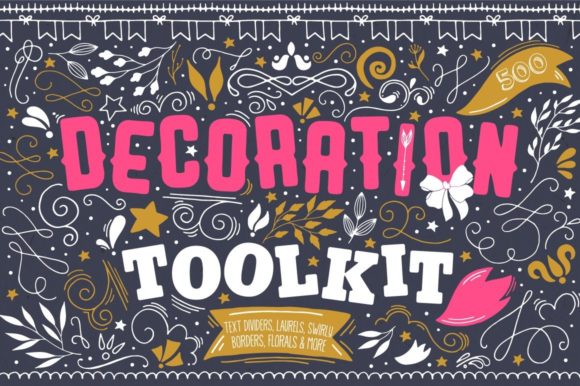
To fully appreciate the scope of this collection, you should click on the image to see all toolkit variations. Visual inspection reveals the level of detail in each asset, confirming that they are ready for immediate integration into your workflow.
Technical Specifications and File Formats
Understanding the technical architecture of a design asset is just as important as its visual appearance. The Decoration Toolkit is engineered for maximum flexibility, ensuring compatibility with a wide range of software environments. All files are stored in three primary formats: AI, EPS, and PNG.
This multi-format approach caters to different stages of the design process. The AI (Adobe Illustrator) and EPS (Encapsulated PostScript) files are vector-based. Vector graphics are defined by mathematical equations rather than pixels, meaning they can be scaled infinitely without any loss of resolution. This is a critical feature for anyone planning to print their work at large sizes, such as billboards or banners.
Each object within the toolkit is stored in an individual PNG file with a transparent background. Raster files like PNGs are essential for quick previews, web usage, or importing into programs that do not support vector editing. The transparency ensures that when you place a flower or a ribbon onto a colored background, there are no unsightly white boxes surrounding the element.
Software Requirements and Compatibility
To leverage the full power of these assets, users must adhere to specific software requirements. While the toolkit is robust, understanding the distinction between vector and raster workflows is key to successful implementation.
Vector Capabilities
The product was created specifically for Adobe Illustrator CS3 or newer. If you are working with vectors, this software offers the best environment for manipulating the paths, colors, and layers of the AI and EPS files. However, the versatility extends beyond Adobe's ecosystem. Vector files in the format EPS 8 are widely compatible and may be used in other vector programs such as CorelDRAW, Affinity Designer, or Inkscape. Before opening these files, always check your program version to ensure it supports the EPS 8 standard.
Raster Processing
For pixel-based editing, the toolkit is optimized for Adobe Photoshop. This allows users to apply filters, adjust color curves, and blend the PNG elements seamlessly with photographs. Additionally, raster files in PNG format may be used in other photo editing programs. Whether you are using GIMP, Canva, or a mobile editing app, the transparent PNGs will integrate smoothly. As with vector files, it is advisable to check the software specifications to confirm PNG support.
Why Choose a Specialized Toolkit?
Selecting the right resources is a strategic decision for any creator. Why opt for the Decoration Toolkit over generic free resources? The answer lies in consistency and quality. Generic clip art often suffers from mismatched line weights, inconsistent styles, and low resolution. In contrast, this toolkit offers a cohesive design language. Every arrow, border, and floral element shares the same aesthetic DNA, ensuring that the final composition looks unified and professionally curated.
Furthermore, the time-saving aspect cannot be overstated. A designer spending hours searching for a specific type of border or trying to trace a complex shape manually can complete the same task in minutes using these pre-made assets. This efficiency allows professionals to focus more on the conceptual side of their work—storytelling, branding strategy, and layout composition—rather than getting bogged down in the mechanics of drawing basic shapes.
Maximizing Value Through Versatility
The utility of the toolkit extends beyond simple decoration. Consider the workflow of a teacher creating educational materials. They could use the Text Dividers to separate quiz questions or the Shapes to highlight key vocabulary words. Similarly, a researcher compiling a report might use the Frames to display data charts or the Borders to add a formal touch to a presentation slide.
Even for the casual user, the impact is significant. Imagine wanting to send a postcard to a friend but lacking artistic skills. By dragging and dropping a Wreath around a photo and adding a Bow in the corner, the result looks handcrafted yet sophisticated. The ability to mix and match over 500 elements means that no two creations need to be identical, fostering creativity and personal expression.
As we continue to navigate a visually saturated world, the ability to produce high-quality, distinctive imagery is a competitive advantage. The Decoration Toolkit empowers users to take control of their visual narrative. Whether you are building a brand from scratch, organizing a family album, or simply expressing yourself creatively, having access to such a vast array of tools ensures that your vision can be realized with precision and style.
Remember, the potential of these tools is unlocked only when you explore them fully. Take the time to review the entire catalog. Click on the image to see all toolkit details and discover how these elements can elevate your next project. From the smallest arrow to the grandest wreath, every component is waiting to help you create something truly beautiful.